
AFJ career field guide · United States
Airtanker and Fixed-Wing Firefighting Pilot Careers
Start with the mission you want to fly. A tanker first-officer seat, a single-pilot Fire Boss and an air attack aircraft need different experience.
If you already fly airplanes, your next step is not necessarily more of the same flight time. Choose a target seat, compare the specific experience it needs and build that gap deliberately. This guide separates the main fixed-wing routes so a requirement for one aircraft does not become an unnecessary barrier to another.
Employer requirements reviewed November 3, 2026.
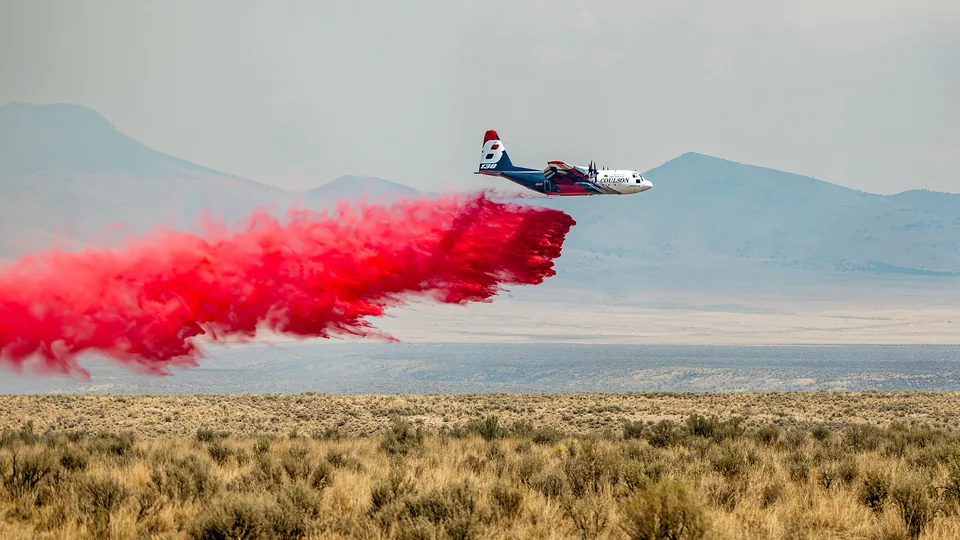
01 / Choose the mission
Three routes into fixed-wing fire aviation
| Route | What you are joining | How to approach it |
|---|---|---|
| Multicrew airtanker | A crew operating a tanker. A first-officer role can precede captain qualification. | Match the exact fleet and first-officer posting. Do not substitute another operator’s captain or Fire Boss requirements. |
| SEAT / Fire Boss | Single-engine airtanker work; a Fire Boss is a water-scooping amphibious aircraft. | Work backward from the single-pilot mission checklist. Do not assume there is a right-seat job in that aircraft to provide an entry ladder. |
| Air attack | A pilot flying a platform supporting aerial supervision and coordination, rather than a tanker dropping retardant. | Compare the operator’s PIC, multiengine, recency and mission requirements. Piloting the aircraft and serving as the air tactical supervisor are distinct responsibilities. |
“Fire pilot” is a useful umbrella term but a poor application target. Choose two or three actual roles in one track before deciding whether to buy a rating, build more multiengine time or pursue aerial-application work.
02 / The crewed tanker route
First officer can be a route in, with its own prerequisites
For an airline, corporate, cargo or military fixed-wing pilot, start by inventorying turbine time, multiengine time, PIC time, instrument experience and multicrew work. Those are useful categories to compare with a tanker employer’s actual posting. They are not proof of eligibility by themselves, and prior fire or aerial-application experience may carry different weight at different operators.
The job title does not tell you whether aircraft training is provided or whether type experience is required before hire. Build your comparison around the operator and fleet: required certificates, medical, category of hours, aircraft prerequisites, training and deployment availability. Separate those from preferences such as previous fire work.
A documented progression, rather than a promised timetable
Aero-Flite’s profile of Chris Daniell describes SEAT flying, an MD-87 first-officer role, a Q400 first-officer role and a later upgrade program before initial-attack captain qualification. Before tankers, he worked as an instructor and aerial applicator.
The useful lesson is the sequence: relevant flying, a crew seat, aircraft experience and an evaluated upgrade. The profile describes one person’s career, not a minimum-hours rule or a schedule every new hire can reproduce.
Build toward command without assuming a time-only upgrade
A first-officer job and a future captain job are separate decisions. Keep track of the experience required for command, the operator’s training process and the applicable mission approval. Being qualified for airline command or completing several fire seasons does not automatically establish tanker-captain approval.
Our November 3 employer sample did not yield a verified current U.S. tanker first-officer checklist with numerical minimums. We therefore do not publish a universal first-officer hour threshold. Aero-Flite’s careers page links to current opportunities; its operator profile documents a route, not an opening.
03 / The single-pilot route
Fire Boss: the total-hour minimum is only the first line
Dauntless Air’s published checklist is unusually useful because it gives both category requirements and specific allowances. It lists 1,500 total hours, but says most pilots meeting all its qualifications were hired with more than 4,000. That is the employer’s experience, not a new 4,000-hour minimum. This is a dated requirements example; the current openings section is separate.
| Category | Published expectation | What to do with it |
|---|---|---|
| General airplane experience | 1,500 total in all aircraft; 1,200 airplane; 200 airplane single-engine land. Commercial certificate and instrument rating. | Compare the category breakdown, rather than assuming total time covers every line. |
| Seaplane and aircraft | 100 ASES hours; applicants with the ASES rating who lack those hours may still apply if other requirements are met. Lists 25 make/model hours provided in training if hired, and 100 turboprop hours as applicable. | The allowances are specific. A training allowance for make/model time does not waive low-level or dispensing experience. |
| Low-level and dispensing | 200 low-level airplane hours, including at least 100 hours of legitimate Part 137 dispensing work. | Identify mission experience you actually lack. Extra high-altitude cruise time does not fill this category. |
| Mountain experience | 200 hours, or 100 after a recognized mountain-flying school. The page also says applicants meeting the other requirements but lacking this specific time may apply. | Read the employer’s definitions and allowance together. It is not a blanket waiver of the complete checklist. |
| Recency | 100 airplane hours in the last 12 months and 10 in the preceding 60 days. | Include a dated recency breakdown when comparing your logbook. |
The employer defines qualifying low-level flying as planned, mission-oriented work and excludes casual sightseeing, pattern work and takeoffs/landings from that category. Do not try to manufacture qualifying experience through unsupervised low flying. Build it in legitimate work and training appropriate to your qualifications.
For a pilot with 2,500 airplane hours but no dispensing experience, simply purchasing the missing seaplane hours would not solve the larger gap. The checklist identifies at least two separate issues. Dauntless may consider the seaplane-hour shortage under its stated allowance; it still describes a real dispensing requirement.
AOPA’s profile of Mikaela Young provides one example of deliberately closing experience gaps. Her route included maintenance and cargo flying, then targeted training and aerial-dispersal experience before joining Dauntless. The useful lesson is identifying the missing experience and building it, rather than copying one person’s timeline.
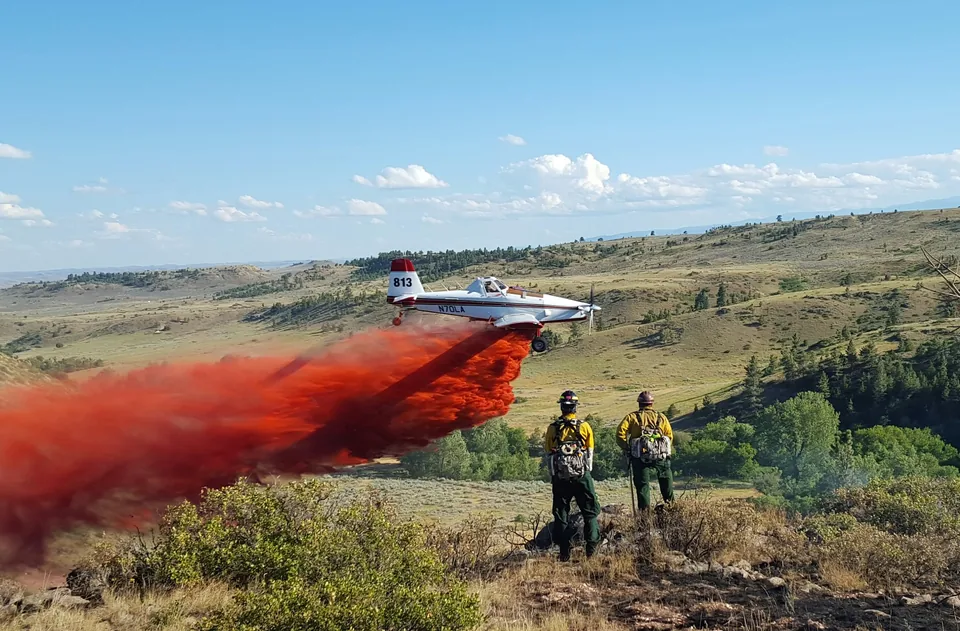
04 / A separate fire mission
Air attack is worth comparing on its own terms
Ponderosa Aviation’s employer careers data gives a concrete example: 1,500 total, 1,200 total PIC, 200 multiengine PIC, 500 fixed-wing hours in the preceding 12 months, 200 cross-country, 100 mountain, 50 night and 75 instrument, including a separately listed 25-hour actual/simulated instrument category. It also lists 100 multiengine hours; the separate 200 multiengine PIC line remains part of its published checklist.
The certificates listed are commercial multiengine and instrument. Ponderosa says AC-690 time will be provided during training. That is useful for an applicant who meets the other categories but lacks that aircraft time. Its data carries 2024 posting/update dates even though it was still served on review; treat it as employer-published requirements, not proof of a new vacancy or an industry-wide standard.
The reviewed Coulson Citation Captain example illustrates a different point: it requires previous U.S. air attack and low-level experience. It lists a 2,000-hour minimum without specifying the time category in that line. We do not reinterpret that as 2,000 total or PIC. Citation experience is preferred, with candidates from comparable aircraft encouraged if they have relevant firefighting experience.
A jet background alone does not establish a fit for that experienced air-attack seat. These postings also do not establish tanker first-officer qualifications. Keep the aircraft, command role and mission together when comparing opportunities.
Turn your present flying into a practical entry plan
Airline, corporate or military turbine pilot
Start with crewed tanker opportunities and air-attack roles. Match the actual required hours and mission experience; do not assume every operator requires a crop-dusting background. If the target specifically requires previous air attack, an unrelated type rating will not close that mission gap.
A workable first step is a fleet-specific logbook summary and a shortlist of postings you meet now, followed by a plan for the missing experience.
Aerial applicator or other relevant low-level pilot
A SEAT or Fire Boss route may let you demonstrate directly relevant experience. Document the work and categories accurately, then compare mountain, turboprop, seaplane and recency requirements. Relevant work can be a strength without satisfying every line.
Choose any additional training for the gap the employer actually needs filled. Do not buy a full bundle of ratings before checking its explicit allowances.
Hour-building pilot
Work backward from a track. Instruction, cargo or other professional flying can build useful time, but a job that adds only one category may leave your target’s PIC, multiengine or mission requirement untouched. A written target/actual/gap comparison is more useful than a single total-hour goal.
Prepare for the job and the working year
Make the application easy to assess: total and PIC, single/multiengine, turbine, relevant aircraft, instrument, low-level/dispensing, mountain experience and recency where requested. Use the employer’s own categories. Separate certificates, completed courses and actual operational experience.
Compare the employment arrangement as carefully as the aircraft. Coulson’s Citation example describes year-round compensation, rotations and company-paid travel without permanent relocation. That is a feature of that posting, not something to assume for every tanker or seasonal fire job. Establish paid duty periods, travel, housing, benefits and off-season obligations before comparing annual income.
Your first season also involves learning the operator’s mission, crew coordination and work with ground resources. A contract day is not automatically a day accumulating flight hours. For a first-officer offer, evaluate the training and supervised experience it actually provides, while keeping upgrade expectations separate from the offer you are accepting.
Browse fixed-wing pilot jobs and compare operators. If a listing is unconfirmed or standing recruitment, use it for employer research rather than treating it as a verified opening.
If you have only a private certificate—or no flying background
Start with the FAA’s pilot resources and an instructor to plan certificates, medical eligibility, cost and early professional work. A private certificate alone is not a qualification for a professional fire seat.
Choose a direction before an expensive specialty course. A future Fire Boss applicant and a future multicrew tanker applicant may need different experience. You can keep both possibilities open while building a foundation, but do not assume a faster total-hour build will supply every later category. Use the broader pilot guide to compare the starting routes.
Sources and scope
Prepared by Aerial Firefighting Jobs. Reviewed November 3, 2026: Dauntless requirements, Ponderosa’s employer careers data, Coulson Citation Captain through its public ADP description, and Aero-Flite’s pilot profile. A careers checklist can remain available between hiring rounds. Ponderosa’s older source dates and the absence of a verified tanker first-officer numerical checklist limit the comparison.
This is a U.S. career guide; Canadian operator minimums are not imported into the tables. Requirements for these individual roles are not legal minimums for every fire pilot. The examples support career planning rather than operational instruction or a guaranteed hire. Send a correction or share career context →
From the current job catalog
Current fixed-wing pilot openings
These listings refresh when you load the guide. They are separate from the dated requirements examples above. Confirm the employer’s current requirements before applying.
No recently confirmed matching openings are available to show here right now. Employers may still be hiring.